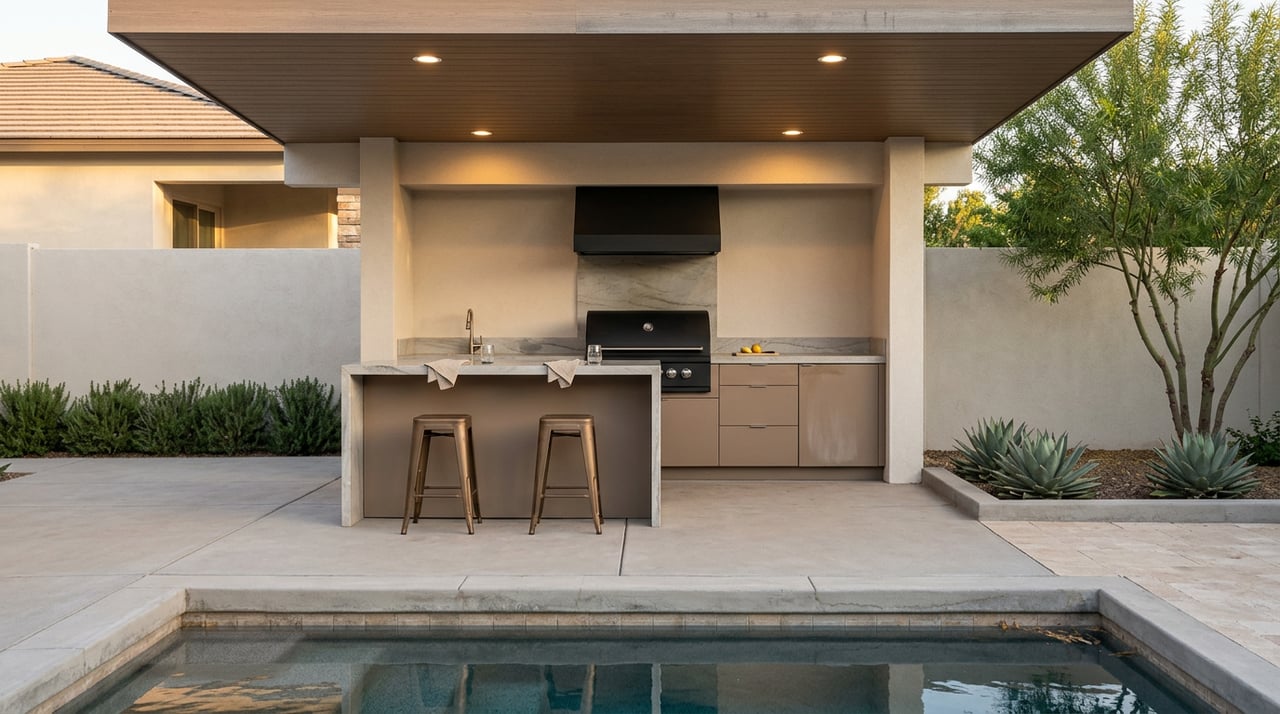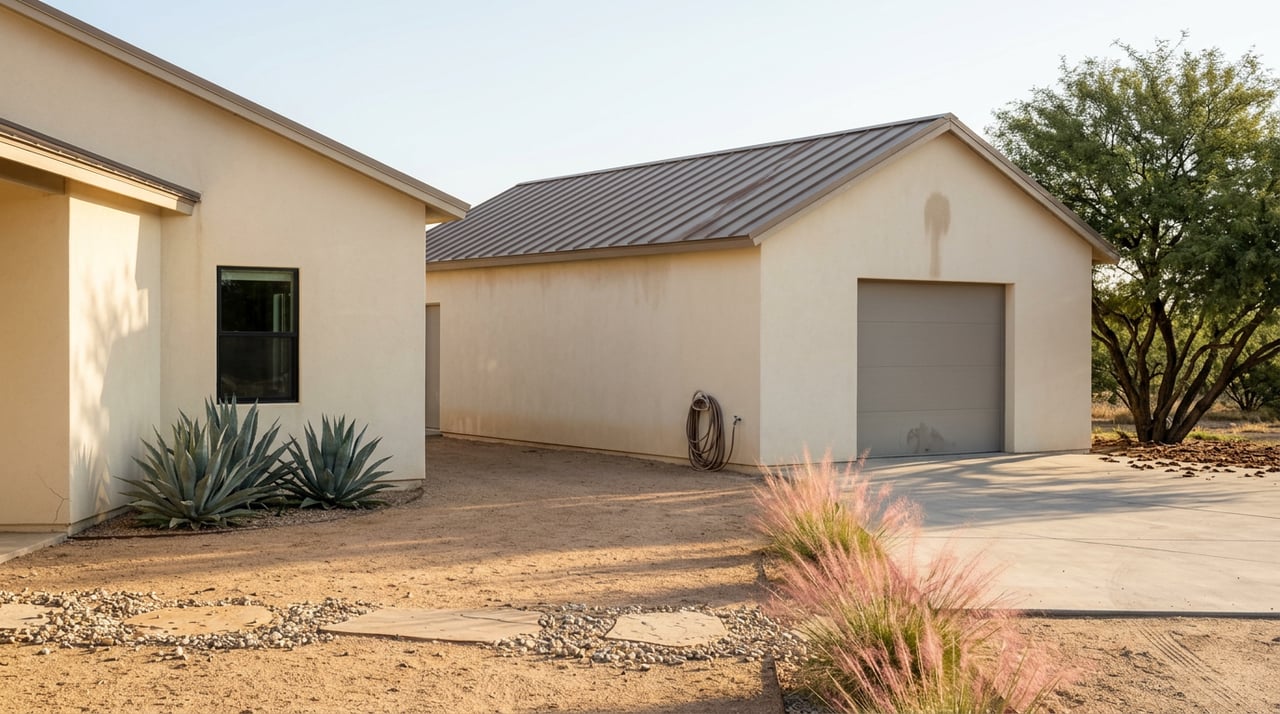
Picture two 1.25-acre horse lots in Queen Creek, priced within a few thousand dollars of each other, both with a new well, both zoned for horses, both photographed at golden hour with the San Tan Mountains in the background. On paper they are the same purchase. In practice, one of them can close weeks faster than the other, cost less in permitting fees, and come with a completely different inspection process. The only thing that separates them is which side of Meridian Road they happen to sit on.
Most buyers never ask that question, because most listings never mention it. But if you are shopping acreage or horse property here, the county line running through town matters more to your closing timeline than almost anything else on the spec sheet.
The road nobody puts in the listing photos
Queen Creek reads as one town, but for septic and well permitting it is two jurisdictions wearing one name. Parcels west of Meridian Road fall under Maricopa County, while parcels on the east side answer to Pinal County, and each county runs its own forms, fees, and inspection scheduling for the exact same type of system. A septic company that works both sides puts it plainly: confirming which county a parcel sits in comes before quoting a permit, not after.
That split is not a paperwork footnote. Maricopa County Environmental Services permits and inspects onsite wastewater systems on its side of the line, while Pinal County Environmental Health does the same job under its own process on the other. Two agents can market functionally identical lots the same way and never mention that one buyer's closing depends on a Maricopa inspector's calendar while the other depends on Pinal County's.
The town itself acknowledges how confusing its own boundaries have become. Queen Creek's government has noted that its incorporated boundary, its water service area, and its planning area are three different maps, and that residents and prospective buyers in surrounding unincorporated Pinal and Maricopa county areas often expect town services like water, sewer, and fire protection that the town does not actually provide there. If the town's own staff field regular questions about where its services start and stop, a buyer assuming every "Queen Creek" address works the same way is making a bet, not a decision.
The six-month clock that starts before you ever see a report
If the property runs on septic, and a large share of Queen Creek does, Arizona law puts a specific clock on the transaction. Under state rule A.A.C. R18-9-A316, the seller must retain a qualified inspector within the six months before transfer and hand the buyer that inspection report along with the permitting and maintenance documents in their possession. After closing, the buyer is then responsible for filing the required notice with the state within a short window, a step that has nothing to do with the title company and everything to do with the buyer's own follow-through.
Older properties complicate this further. Arizona's desert soil led plenty of builders toward seepage pits rather than the horizontal leach fields most buyers picture, and on an older pit system, the documentation a seller is supposed to hand over is often thin or missing entirely, which means the six-month inspection becomes the only real record of the system's condition rather than a formality layered on top of good paperwork.
Queen Creek's own utilities page reinforces the same expectation from the town's side: records of septic maintenance must be kept and passed on to the next owner when the property changes hands. Ask for that file before you are under contract, not during the inspection period.
Septic is not a niche horse-property issue here either. The same local company that handles both counties' permits describes Queen Creek's system as running from the original townsite through newer master-planned communities like Hastings Farms and Cortina all the way out to the acreage on the rural edges, with thousands of area homes relying on a private onsite wastewater system rather than a sewer connection.
| Side of Meridian Road | Governing agency | What that means for your closing |
|---|---|---|
| West (Maricopa County) | Maricopa County Environmental Services | Permitting, fees, and inspection scheduling run through Maricopa's process |
| East (Pinal County) | Pinal County Environmental Health / Aquifer Protection Division | Separate forms and fee schedule, a different inspection queue |
If the lot relies on a private well instead of, or in addition to, septic, the same county split applies to permitting. Pinal County's Aquifer Protection Division, for example, reviews well permit applications on parcels of five acres or smaller before referring them to the Arizona Department of Water Resources, which covers most of the acreage lots buyers are actually shopping in this price range. A five-and-a-half-acre parcel and a four-acre parcel next door can move through two different review paths for the same well.
What changed on the ground this spring
None of this is static. On April 15, 2026, the Queen Creek Town Council unanimously approved Ordinance P25-0153, which removed the animal unit count that had capped how many horses, cows, goats, or other animals a one-acre-or-larger property could keep, and for the first time permitted swine on lots of one acre or more. Mayor Julia Wheatley framed the change around the town's identity rather than its growth pressure, telling the council the process gave the town a chance to preserve its agricultural heritage.
Vice Mayor Bryan McClure, who introduced the revised ordinance, put the intent even more directly:
"We need to honor our agricultural roots and heritage."
The vote was not close. Coverage of the meeting notes that only about 1,200 of the town's roughly 28,000 residential lots are even at least an acre, which is the detail that gives the ordinance its weight. Removing the animal cap does not open up a large new slice of the town to horse and livestock use. It changes what the existing, already narrow slice of qualifying lots can do, which raises the functional value of that 1,200-lot pool without changing its size.
That is the part worth sitting with if you are shopping this niche. The ordinance answers what you can do with the land once you own it. It says nothing about which county's permitting office you will be dealing with to get a system approved, replaced, or inspected before you own it. Those are two separate questions, and a buyer who only asks the first one can still get surprised by the second.
Before you write an offer on Queen Creek acreage
- Ask which side of Meridian Road the parcel sits on before you get attached to the listing. It changes which county office you will be dealing with for septic or well permitting.
- Request the septic maintenance and permitting file directly from the seller early in your due diligence, not during the final week of inspections.
- If the system is older or described as a pit rather than a leach field, budget extra time for the six-month inspection to double as your main source of information about its condition.
- If the property uses a private well and sits on five acres or less, confirm which county reviewed the well permit before it was referred to the Arizona Department of Water Resources.
- If you are buying with horses or other livestock in mind, confirm the parcel is one acre or larger under the April 2026 ordinance. Smaller lots still operate under the prior animal-unit system.
- Understand that filing the post-closing paperwork with the state is on you as the buyer, not something that happens automatically at the title company.
A couple of things buyers ask
Is septic only something horse-property buyers need to think about in Queen Creek? No. It runs through the original townsite and through newer master-planned neighborhoods like Hastings Farms and Cortina, not just the rural acreage on the edges of town. If you are buying anywhere in Queen Creek without a confirmed sewer connection, ask.
What if the property runs on a private well instead of a county or town water connection? On parcels of five acres or smaller, the well permit application is reviewed at the county level before it goes to the Arizona Department of Water Resources for final approval. Which county reviews it depends on the same Meridian Road line that governs septic permitting.
Buying acreage in Queen Creek rewards patience more than any other property type in the East Valley, because so much of what determines your timeline is invisible in the listing photos. If you are weighing a horse property or a rural lot here and want someone who will walk the county line with you before you write an offer, Susan Bermudez and the SB Property Team have handled exactly this kind of transaction across Queen Creek's back roads. Reach out and let's map out what your specific parcel actually involves before you are under contract.