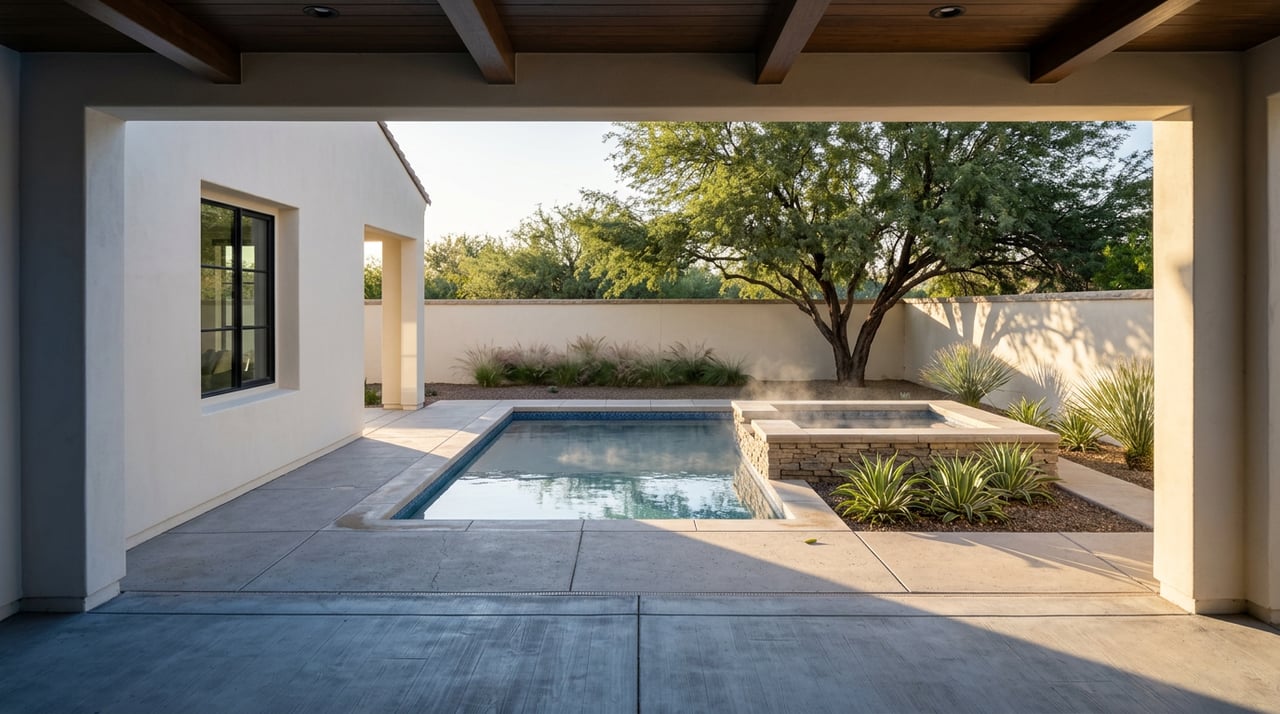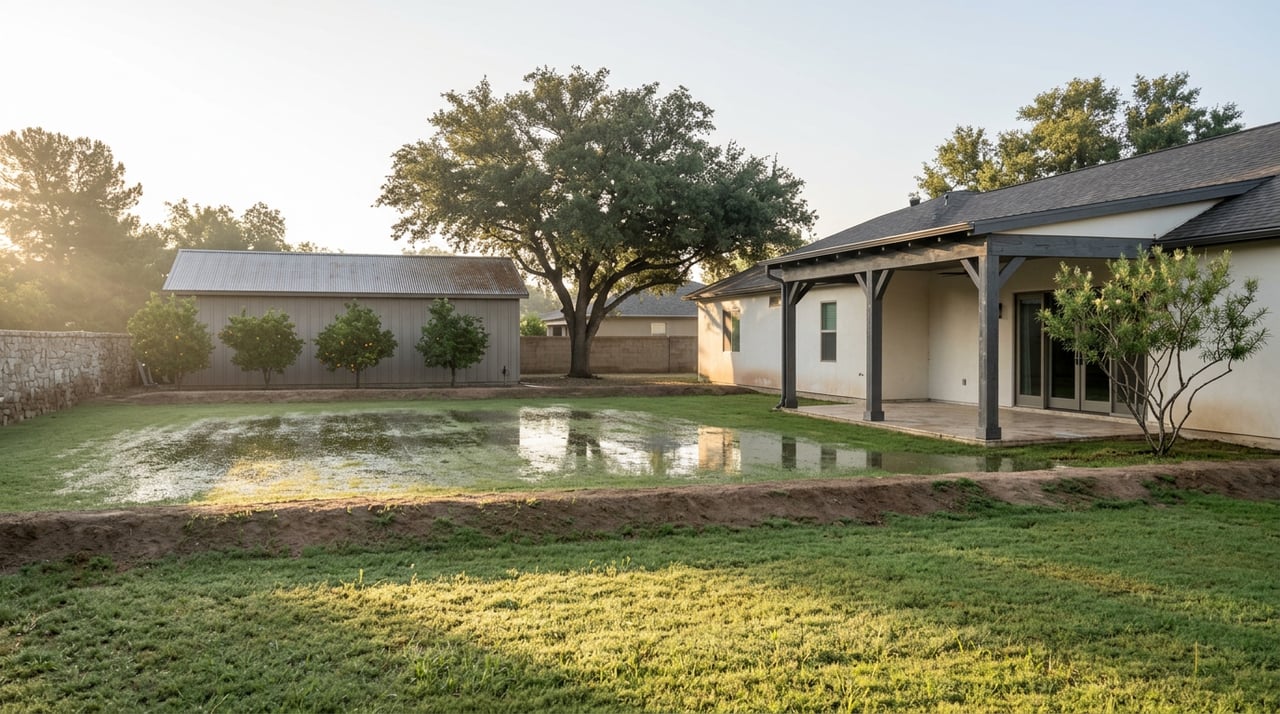
Every January, somewhere in south or east Gilbert, a first year buyer walks out to a backyard that was full and green two days earlier and finds a dry ditch instead. The pool is fine. The grass is starting to yellow. Nothing is broken. The system was shut off on purpose, weeks ago, by a water district the buyer never heard mentioned during the sale, and it will stay off for about five weeks while crews drain and repair the canals that feed the whole neighborhood.
That moment is the tell. "Flood irrigation" reads on a listing sheet like a single, charming feature: horse privileges, no HOA, mature trees, irrigated lot. In practice it's shorthand for a set of legal and mechanical arrangements that differ from one Gilbert subdivision to the next, and that difference decides who fixes what, when the water actually stops, and what paperwork the seller owes you before you sign.
Gilbert has three irrigation zones, not one
Gilbert's own water planning documents split the town into three bands, running roughly west to east. Land west of the Salt River Project's Eastern Canal carries SRP water rights and is what the town calls "on-project" land, meaning it was part of the original Roosevelt Dam service area. Land between the Eastern Canal and the Roosevelt Water Conservation District canal carries RWCD rights instead. East of the RWCD canal, the town's own planning documents note the land has no surface water rights attached to it at all, regardless of how green the subdivision next door looks.
That third category is the one that trips people up. Two lots can sit inside the same master-planned name, a mile apart, and one carries a water right while the other never did. A "flood irrigated" claim in a listing description is not a town-wide amenity. It's a fact about a specific parcel, and it needs to be confirmed for that parcel, not assumed from the neighborhood's reputation.
| Zone | Location within Gilbert | Water source |
|---|---|---|
| Zone One | West of SRP's Eastern Canal | Salt River Project (on-project) |
| Zone Two | Between the Eastern Canal and the RWCD Canal | Roosevelt Water Conservation District |
| Zone Three | East of the RWCD Canal | No surface water rights |
The water is attached to the dirt, not to you
Under Arizona law, an irrigation right like this is appurtenant to the land. SRP is explicit about what that means in practice: the right cannot be transferred, bought, or sold apart from the parcel it belongs to. You don't negotiate for more water or less. You inherit whatever allocation the specific acreage has carried since the district assigned it, and that allocation is what shows up when you order deliveries, not a number you can adjust by asking.
This matters most when a large irrigated lot gets split. If a seller's five-acre parcel becomes two 2.5-acre lots, the water right doesn't automatically follow in equal halves. Ask specifically how the right was apportioned on any lot that used to be part of something bigger, and get it in writing rather than taking a listing agent's description at face value.
The utility does not own the ditch behind your fence
Here's the part that surprises new owners most: SRP does not maintain the private neighborhood systems that actually move water from the main canal to your yard. There are more than 1,300 separate private delivery systems across the SRP service area, and each one is the responsibility of the property owners connected to it. If a slide gate is set wrong three doors down, or a neighbor's valve is stuck open, your water pressure drops and it's on you and your neighbors to walk the line and find the problem, not SRP.
Some neighborhoods formalize this through an Irrigation Water Delivery District, a county-recognized structure for shared maintenance and cost. Others rely on an informal volunteer, what SRP calls a "key homeowner," who knows the system and fields questions when something goes wrong. Either way, buying into a flood-irrigated lot means buying into a small, unpaid utility company made up of your neighbors. Before you close, ask who currently plays that role on your block and whether there's a shared maintenance fund or just a group text.
The five weeks nobody puts on the listing
Every system needs downtime, and RWCD runs it on a real calendar. This past winter, RWCD's system-wide dry-up for canal and lateral repairs ran from December 3 through January 7, a stretch of roughly five weeks during which no irrigation water reached RWCD customers anywhere in its 40,000-acre service area, which stretches across Mesa, Chandler, and Gilbert. It happens on a similar schedule most years.
If you close on an RWCD-zoned lot in November, you should plan on a dry backyard within weeks, not months, of moving in. That's not a defect. It's routine maintenance. But nobody puts it in the listing photos, and a buyer who doesn't ask will spend their first Gilbert winter wondering if something broke.
What the seller actually owes you on paper
Arizona doesn't require a single mandatory disclosure form by statute, but in practice a flood-irrigated Gilbert acreage lot comes with more paperwork than a standard subdivision home, not less. Three documents matter here specifically:
- The Seller's Property Disclosure Statement (SPDS). The utilities section is where a seller states the water source for the property. For an irrigated lot, this is where "flood irrigation" should actually be named as the source, alongside domestic water, so read that section closely rather than assuming it's covered elsewhere.
- The AAR Domestic Water Well/Water Use Addendum. Many of these acreage lots also have a private well, and the addendum used across Arizona asks directly whether there are water uses on the property other than the well, including irrigation. If a seller's well paperwork doesn't mention the irrigation right at all, that's worth a direct question before you waive your inspection period.
- The Affidavit of Disclosure for unincorporated parcels. A large share of Gilbert's irrigated acreage sits on what agents and appraisers call a county island, land inside or adjacent to town limits that was never annexed and remains under unincorporated Maricopa County jurisdiction. Arizona statute requires a separate affidavit for these parcels covering, among other things, water rights and legal access to the property. If your lot has no HOA and is marketed as a county island, this affidavit isn't optional paperwork. It's the document doing the legal work that a homeowners association would normally do in a standard subdivision.
If you're financing on-project land west of the Eastern Canal, add one more question to your list. SRP holds easements for its ditches and laterals across that on-project land, and a pool, addition, or garage placed inside one of those easements can force a redesign or require a written clearance letter before a lender will close. A stamped survey before you finalize a site plan is cheap insurance against a delay you don't see coming.
The historic core doesn't count anymore
One more thing worth knowing if you're picturing "historic Gilbert" as the flood-irrigated part of town: it isn't, at least not through a town utility. From 1974 until 2011, Gilbert itself ran a flood irrigation service for 114 properties in a square mile at the historic heart of town, near Gilbert and Elliot roads, drawing on the same Salt River Project allocation that still waters the west side of town today. The town council voted to discontinue that service effective January 1, 2011, after years of subsidizing it from the general fund, and residents who wanted to keep flooding their yards were told to arrange their own water directly with SRP.
That means today's flood-irrigated inventory is concentrated in specific, named acreage subdivisions built or platted with their own private delivery systems, places like Greenfield Acres, White Fence Farms, Circle G Ranches, and Sawyer Estates, rather than in the older downtown grid. If a listing near downtown Gilbert advertises flood irrigation, dig into why. It may be a private arrangement the owner set up independently, not a continuation of anything the town once ran.
Before you write an offer
Ask for the parcel's specific zone (SRP, RWCD, or none), not the subdivision's general reputation. Ask who currently manages the private delivery system on that block and whether there's a shared cost arrangement. Ask when the last dry-up hit and how long it lasted. And if the lot sits on an unincorporated county island, make sure the Affidavit of Disclosure is in your file before your inspection period runs out, not after.
None of this makes an irrigated Gilbert acre a harder buy. It makes it a different kind of buy, one where the water is part of the deal in a way that a standard subdivision lot never asks you to think about. Getting the zone, the maintenance arrangement, and the paperwork right before you close is the difference between loving that green backyard and calling someone in February to ask where the water went.
If you're weighing one of Gilbert's flood-irrigated lots against a standard subdivision home, Susan Bermudez and the SB Property Team can walk the specific parcel's water history with you before you write an offer. Get Your Free Home Valuation and let's talk through what a lot like this actually costs to own.
Does flood irrigation affect what a lender or appraiser will approve? It can, mainly through easements rather than the water itself. On SRP's on-project land, the district holds easements for its ditches and laterals, and a structure built inside one can require a survey and a written clearance letter before closing. Confirm buildable area with a stamped survey before you design around a pool or addition.
Can I have a lot switched from RWCD or SRP water to city water only? That's a conversation with the specific district and the Town of Gilbert, not a documented process this piece can walk you through. What's confirmed is that the right itself stays with the land regardless of what you choose to do with it, so dropping irrigation service doesn't return the right for sale or transfer.
Why do some homes in the same subdivision have irrigation and others don't? Usually because the subdivision straddles one of Gilbert's zone boundaries, or because a larger parcel was split at some point and the water right wasn't divided evenly between the resulting lots. Always confirm the right at the parcel level.