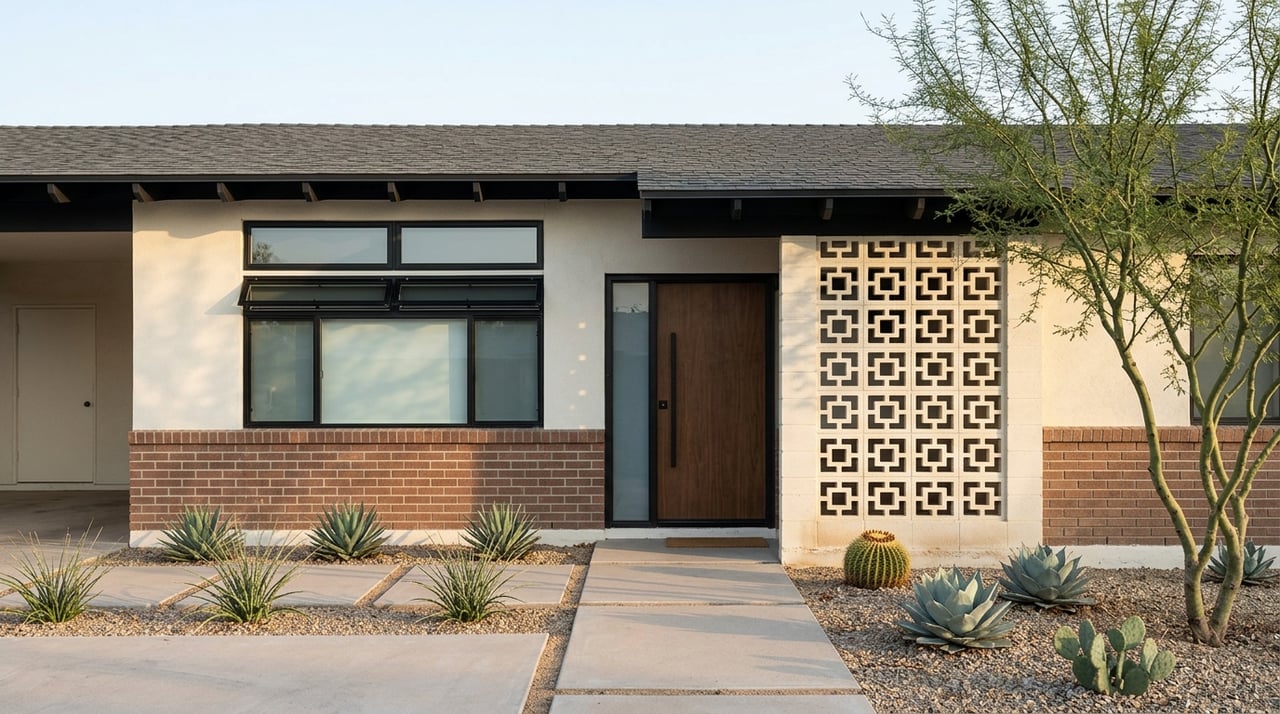
If you have ever driven through older parts of Mesa and thought, “Why does every block feel a little different?” you are not imagining it. Mesa’s older neighborhoods were built in layers, which means you can see early settlement homes, bungalow streets, period-revival details, and postwar ranch layouts all within a relatively small area. If you are trying to buy, sell, or simply understand an older home in Mesa, knowing the style can tell you a lot about the home’s age, layout, lot pattern, and possible renovation rules. Let’s dive in.
Why Mesa’s older homes vary so much
Mesa does not have just one historic core. According to the City of Mesa, the city has eight locally designated historic districts, and it also identifies Heritage Neighborhoods with older homes and historic character.
That matters because Mesa’s older housing stock developed over time rather than all at once. In practical terms, you may find simple early homes on one street, bungalows on the next, and ranch-style properties just a few blocks away.
For buyers, this is more than an architectural detail. In Mesa, a home’s style often gives you clues about how it lives day to day, from room sizes and floor plans to parking setups and the way the lot is used.
Where Mesa’s historic styles appear
Several Mesa districts help tell the story of how home styles changed over time. West Second Street is known for early National Folk and Vernacular homes, a large share of bungalows, several Mission Revival and Colonial Revival homes, and a few ranch houses near the edges.
Robson shows a transition many buyers notice right away. The City of Mesa notes that nearly half the homes there are bungalows, but the district also includes later Colonial, Tudor, Minimal Traditional, and Ranch forms.
Glenwood/Wilbur and Evergreen follow a similar pattern. These areas began with early folk houses and bungalows, then added period-revival homes, and later saw postwar Minimal Traditional and Ranch construction.
Fraser Fields and West Side-Clark reflect a more auto-oriented, postwar shift. These areas are especially helpful if you are trying to understand Mesa’s mid-century ranch character, with one-story homes, attached parking, and site plans designed more around cars and patios.
Bungalow and Craftsman homes in Mesa
Bungalows were common in Mesa from about 1910 to 1940. If you are picturing a cozy home with a strong front porch and a low, wide profile, you are probably thinking of a bungalow.
Local examples are usually one to one-and-a-half stories tall with broad rooflines, wide eaves, and visible roof supports or brackets. These homes often feel grounded and approachable from the street, with porches that visually connect the indoors and outdoors.
Inside, Craftsman bungalow layouts are often more open than buyers expect from an older home. Preservation sources describe relatively open interiors with fewer interior doors and a close relationship between the porch, living room, and dining area.
For today’s buyers, that can be a real plus. You may get historic character without the fully chopped-up floor plan that some older homes have.
National Folk and Vernacular homes
Some of Mesa’s earliest surviving homes are National Folk or Vernacular houses. You will see these especially in districts like West Second Street and Glenwood/Wilbur.
These homes are usually practical and lightly detailed. Instead of ornate design features, they tend to have straightforward shapes and simple massing that reflect Mesa’s early settlement period.
If you are shopping for one, the appeal is often in the simplicity. These homes may offer a more direct connection to Mesa’s earliest residential development, but they can also feel more modest in layout and size than later styles.
Period Revival styles in Mesa
Mesa’s period-revival wave begins in the mid-1920s, and this is where architectural vocabulary gets more colorful. In these homes, buyers often notice details like stucco walls, tile roofs, arched openings, steep rooflines, and more decorative exterior features.
The City of Mesa identifies several revival styles that appear in older neighborhoods, including Mission Revival, Tudor Revival, Spanish Colonial Revival, Pueblo Revival, and Colonial Revival. These styles often sit side by side with bungalows because many districts built out over multiple decades.
Mission Revival
Mission Revival homes in the Southwest typically feature flat stucco surfaces, red clay tile roofs, and deep openings. If you like a home with a distinct Southwestern presence, this is one of the styles that often delivers it.
Tudor Revival
Tudor Revival homes are generally high-pitched and asymmetrical. They stand apart from simpler bungalow and ranch forms because the roof shape and overall massing create a more dramatic look from the street.
Spanish Colonial Revival
Spanish Colonial Revival homes are known for stucco walls and tile roofs. In Mesa, these homes often give buyers the classic design cues they associate with older Arizona architecture.
Pueblo Revival
Pueblo Revival homes tend to be more irregular and organic in plan. That can create a softer, less formal appearance compared with more symmetrical styles.
Colonial Revival
Colonial Revival homes are usually simpler and more formal in their massing. If you prefer symmetry and a more traditional, orderly appearance, this style may stand out to you.
Minimal Traditional homes explained
Minimal Traditional homes represent Mesa’s move toward less ornate and more affordable construction after the Depression. These homes are often compact, practical, and easier to recognize once you know what to look for.
They are typically one to one-and-a-half stories with square or rectangular shapes, low-to-moderate roof pitches, and only a small porch or stoop. Some also include attached garages or carports through side wings or breezeways.
For buyers, this style often sits between earlier historic charm and later suburban convenience. You may find a simpler footprint than a bungalow, but with more traditional room separation than a full ranch-style layout.
Mesa’s mid-century ranch homes
Ranch homes became the dominant postwar form in Mesa’s younger historic districts. If you think of a one-story home with a long, low shape and easy indoor-outdoor flow, you are likely thinking of a ranch.
The City of Mesa identifies Early Ranch, Classic Ranch, California Ranch, and Spanish Colonial Ranch variants in Fraser Fields. National Park Service descriptions of ranch homes emphasize one-story massing, low-pitched roofs, large windows, sliding glass doors, open floor plans, and attached garages or carports that connect to patios and rear outdoor space.
Fraser Fields is one of the best examples of this shift in Mesa. The district combines large lots, one-story ranch homes, and many original or later-altered carports and garages.
That variety matters when you are evaluating a property. One ranch may feel very original, while another may have an enclosed carport, a modified garage, or an addition that changes how the home functions.
Is every ranch home mid-century modern?
Not exactly. Ranch and mid-century modern are related, but they are not the same thing.
Mid-century modern is a narrower category, generally tied to roughly 1933 to 1965 and known for clean lines, functionality, and organic forms. In Mesa, the closest visual cousins may be the Contemporary homes noted in districts like Fraser Fields and West Side-Clark, which the city says may include flat roofs and larger expanses of glass.
So if you are house hunting in Mesa, it helps to use the terms carefully. Many homes get labeled “mid-century” in casual conversation, but the actual architecture may be ranch, contemporary, or a blend of postwar influences.
What style can tell you about daily living
Home style is not just about curb appeal. In Mesa, it can also hint at how a home lives.
A bungalow may offer a welcoming porch and a more connected main living area. A Minimal Traditional home may have a compact plan and simpler exterior. A ranch home may offer one-story living, larger windows, and stronger access to patio space or the backyard.
Style can also signal likely tradeoffs. Older homes may bring more character, while postwar homes may offer easier flow and parking, though those parking areas may have been changed over time.
What to check before buying an older Mesa home
If you are considering a historic or mid-century property in Mesa, a little extra homework can go a long way. The style tells part of the story, but the district location and past modifications matter too.
Check historic district status
If a home is in a local historic district or landmark overlay, exterior changes are not handled the same way as they are on a newer tract home. The City of Mesa uses district and landmark overlays as zoning tools for preservation, and changes to locally designated historic resources are reviewed through the Certificate of Appropriateness process.
That does not mean you cannot improve the property. It does mean you should understand the review process before planning exterior changes.
Review additions and parking changes
In ranch-era neighborhoods especially, original carports or garages may have been enclosed or converted. That can affect parking, storage, layout, and how the property functions today.
As you tour homes, pay attention to whether a modification looks original, practical, or both. A home with flexible living space can be a win, but you will want clarity on how those changes affect usability.
Understand older-material risks
Homes built before 1978 are more likely to contain lead-based paint. The EPA states that 87% of homes built before 1940 and 24% of homes built from 1960 to 1978 have some lead-based paint, and renovation or repair work in pre-1978 homes can create hazardous lead dust.
If you are buying an older Mesa home, this is one of the key issues to keep on your checklist. It is part of understanding the full picture of ownership, maintenance, and future updates.
Why style knowledge helps buyers and sellers
If you are a buyer, understanding home styles can help you narrow your search faster. You can focus on the layout, lot pattern, and architectural details that fit how you want to live.
If you are a seller, style knowledge helps you position your home more clearly. A strong front porch, a broad bungalow roofline, a tile-roof revival exterior, or a classic ranch layout can all shape how your home is presented and understood in the market.
In a city like Mesa, that context matters. When you understand what a home is and how it fits into the area’s development story, you can make more confident decisions.
If you are exploring historic or mid-century homes in Mesa and want clear, local guidance, connect with Susan Bermudez for personalized help buying or selling with confidence.
FAQs
What are the most common historic home styles in Mesa?
- Mesa buyers commonly see Bungalow/Craftsman, National Folk or Vernacular, Mission Revival, Tudor Revival, Spanish Colonial Revival, Pueblo Revival, Colonial Revival, Minimal Traditional, and Ranch homes.
Where can you find older historic homes in Mesa?
- Older homes cluster in Mesa’s locally designated historic districts, including areas such as West Second Street, Robson, Glenwood/Wilbur, Evergreen, Fraser Fields, and West Side-Clark.
What does a Mesa bungalow usually look like?
- A Mesa bungalow is usually one to one-and-a-half stories with a low-slung profile, broad roofline, strong front porch, and visible roof supports or brackets.
What is the difference between a Mesa ranch home and a mid-century modern home?
- Ranch is a broad postwar house form that is common in Mesa, while mid-century modern is a narrower design category associated with clean lines, functionality, and, in Mesa’s contemporary examples, sometimes flat roofs and larger expanses of glass.
What should you know before updating a historic home in Mesa?
- If the property is in a local historic district or landmark overlay, exterior changes may be reviewed through Mesa’s Certificate of Appropriateness process.
What should buyers watch for in older Mesa homes?
- Buyers should review district status, look closely at additions or enclosed carports and garages, and understand that homes built before 1978 are more likely to contain lead-based paint.